Drawing on the Kozinets reading, there are some interesting typologies that I would like to explore/apply through my micro net-nography …..
All diagrams from: Kozinets, R. (2010) Understanding Culture Online. Netnography: Doing Ethnographic Research Online. London: Sage. (21-40).

This diagram seeks to visualise the different types of online community (as opposed to community members) based on the communities’ focus on social engagement and consumption activity. Where would a MOOC community fit into this? Is it possible to locate communities within this framework? What if the purpose of the community is contested amongst members?
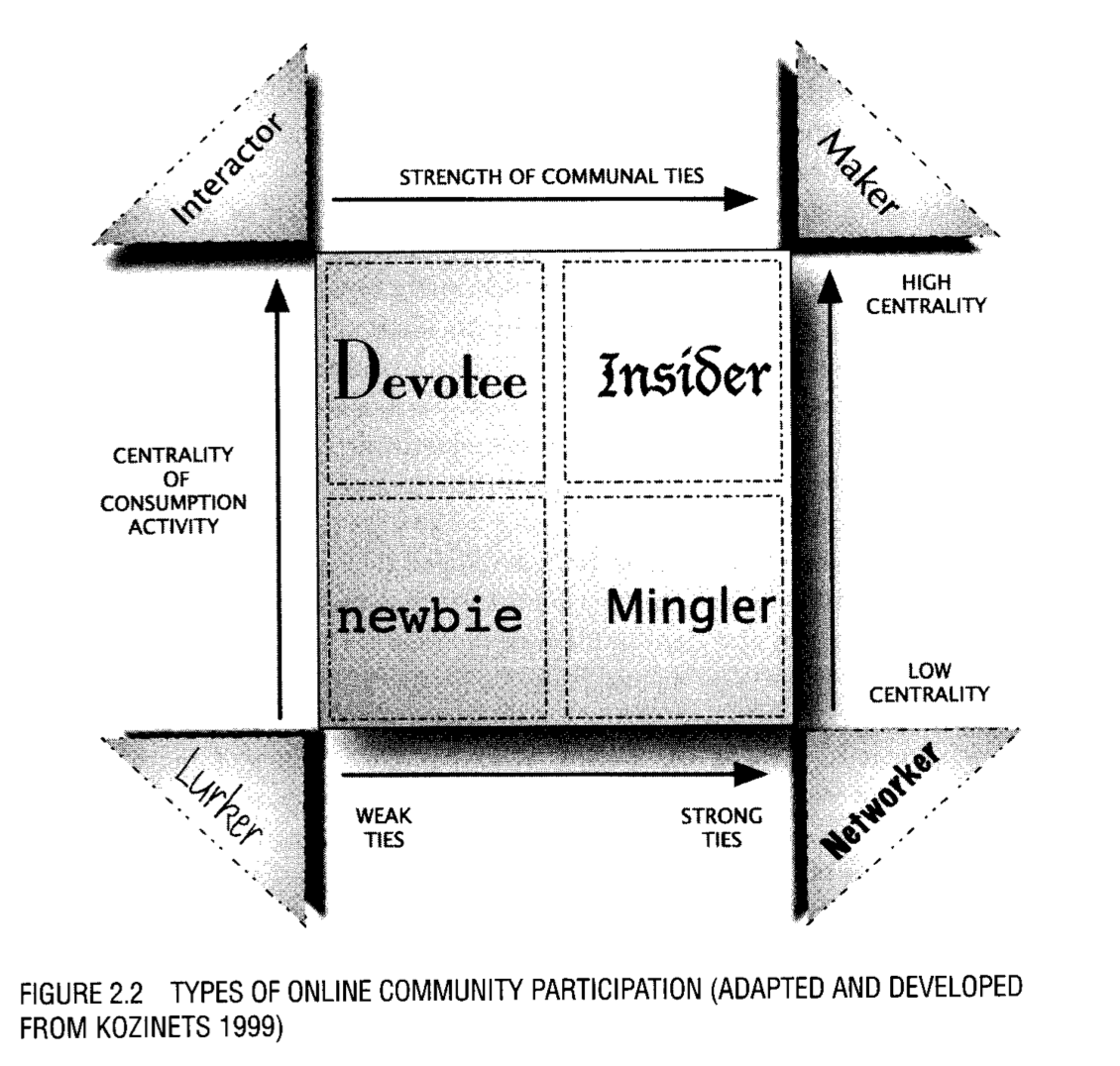
This diagram shows the different social identities of online community members, based on their level of engagement with the ‘consumption activity’ and their level of social engagement with other community members — can this be adequately applied to temporary online learning communities such as MOOCs?
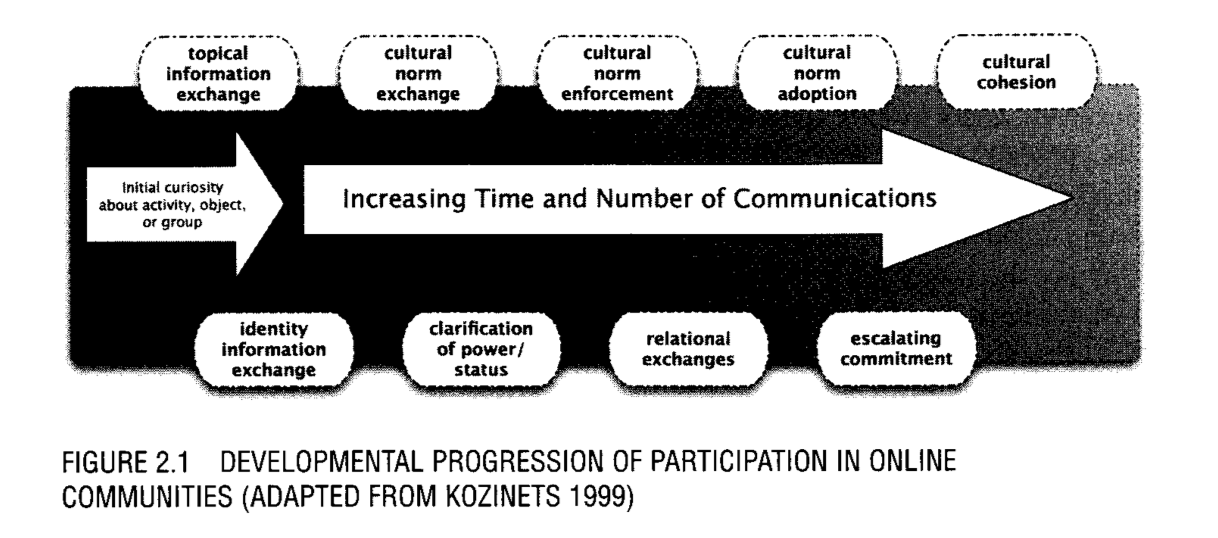
This model seeks to visually represent the stages of online participation: from lurkers and newbies through to full community participation — implication is that time and level of contact are key to building a community identity — what impact for MOOCs which are relatively short deliveries and where learners often have limited time for participation
Nick, thanks, helpful summary of Kozinets’ reading. I guess that could be categorized as a former MOOC “cruiser,”now trying to graduate to ethnographer status, which to me represents a stage beyond mere participation. PJ
Really useful Nick, thanks for the summary